


Lostport (E-Book)
The man calling himself Ben McBride entered the witness protection program to break free of a life of crime and violence in Tampa. Given a new past, and hope for a new future, he’s about to board a flight to Tucson when word comes that his cover there is blown, and he has to head in a different direction: north to a town called Eastport, on the Erie Canal outside Buffalo.
It doesn’t take Ben long to find trouble in the declining snowbound town the locals call Lostport. Because from the moment he gets there, the local law is on him. He’s being followed wherever he goes. And he soon gets the feeling he’s not the only protected witness hiding out in Lostport.
Is it bad luck? Coincidence? Or is someone behind the scenes pulling strings to assemble a group of men desperate enough to pull a once-in-a lifetime heist?
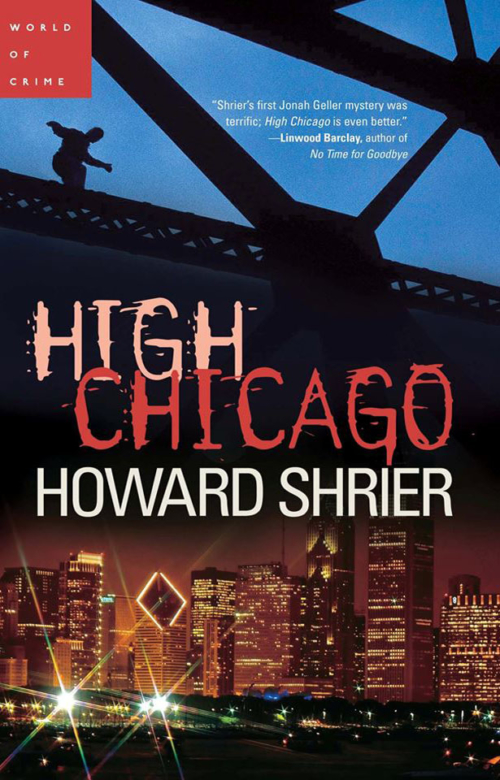
From the award-winning author of Buffalo Jump, High Chicago and Boston Cream comes a thriller about a man caught up in a scheme that will test his strength and ingenuity and take him back to the violence he tried so hard to escape.
Coming soon. |
Part One
“No Witness Security Program participant, who followed security guidelines, has been harmed while under the active protection of the U.S. Marshals.”
-- http://www.usmarshals.gov/witsec
Chapter One
The conference room could have been anywhere but it happened to be in the part of northern Virginia close to Falls Church. Its street address appeared nowhere and was never spoken. In a room without windows, at one end of a table meant to hold at least eight, Ben McBride sat with a steaming cup of coffee and a doughnut he appreciated but didn’t want. The three men grouped around the far end were all from the Marshals Service, and all had identical cream folders in front of them.
“The nephews’ names,” said Al Gunnarson, the senior Inspector.
“Dylan and Deacon,” Ben said.
“The niece?”
“Alicia. She’s a darlin’. She’ll be eight in the spring.”
“What date?”
“April tenth. Uncle Ben wouldn’t forget that.”
The youngest of the marshals, and the one with the most swagger, was a stocky six-footer named Mike Hernandez. He said, “Your size, Ben, your build, you must have played some ball. Where’d you go, Pomona High?”
“No,” Ben said, “My mom wanted me to go to Diamond Ranch.”
“Why?”
“Because Pomona was mostly Hispanic by then. No offense.”
“I’m only half-Hispanic,” Hernandez said, “so I’m only half-offended. What was the team there called?”
“The Panthers.”
“Middle linebacker?”
“Inside. Coach Simpson liked a three-four defense.”
“Coach Simpson?”
Ben looked at him, not getting it for a second, then said, “Shit. Coach Simon. Philip Simon.”
“You sure now?”
“Yes.”
“You don’t want to change your mind again?”
“No.”
“Because there’s no second chances out there.”
“I said I’m sure. I played inside linebacker for Coach Simon at Pomona, okay? I was All-District my junior and senior years.”
“No shit.”
“You could look it up.”
“I don’t have to. I’m the one who planted it.”
“What about women?” asked Ed Larkin. “Ever been married?”
Ben liked Larkin the best of the three. He was the straightest of the straight shooters. Never a word of bullshit or the least bit of spin. A man in his early fifties with his hair shorn as short as it could get. Down to the wood, as Ben’s mother would have said; his real mother, not the fictional one.
“My wife passed away two years ago, Ed. Breast cancer.”
“Oh. Sorry to hear that. You did that very well, by the way.”
“Did what?”
“Looked away when you said your wife died. I was a woman, I’d be outside your door with a casserole.”
“I don’t know if I should say fuck off or thanks.”
“You can thank me when you’re safely relocated, so fuck off is fine for now. So is that why you left Tampa, Ben? To get away from those sad memories of your late wife?”
That wasn’t it and the marshals all knew it. The man now calling himself Ben McBride was a dead man if certain people in Tampa ever found him.
The three of them kept at him with questions about his past—his new one, the one contained in a sealed envelope in Larkin’s briefcase, this cooked-up story of a kid who grew up in Pomona, California, the youngest of three. Father ran a plumbing supply business, mother taught elementary school. Two older sisters, one of whom had the adorable niece; the other had the boisterous nephews. They ran through his grades, his sports accomplishments and injuries, Mom and Dad’s extended families, his scars and the one tattoo.
College? He finished one year at Cal Tech, where he studied geology and planetary sciences, then dropped out, disappointing both himself and his parents. Worked for his dad’s company for a couple of years and saved enough money to start his own business. House renovations, mostly. Sometimes framing work, but mostly building and installing kitchen cabinets, decks, porches.
“Isn’t it time to go to the airport yet?” he said. “You guys are giving me a headache.”
“You want to know a headache?” Larkin said. “A pathologist digging slugs out of your brain and dropping them in a metal pan.”
* * *
Larkin made him sit in the back seat for the ride to the airport. Gunnarson and Hernandez had said their goodbyes inside.
“Is this really necessary?” Ben asked. “It’s what, a twenty-minute drive?”
“It’s not a necessity, it’s a rule. Statistically the back seat is the safest place for you to be if we get rammed or rolled.”
“Come on, Ed. No one’s ramming or rolling us. No one knows I’m here.”
“That you’re aware of.”
“It’s our last ride together.”
“All the more reason to follow the rules. That’s what keeps guys like you alive.”
Larkin got onto the Dulles access road, his eyes roaming from mirror to mirror, the rearview and both sides. “You want to go through it again?”
“Christ, no.”
“All right. You did well back at the center. Just stick to the facts and follow the rules. Know them and live by them. What did I tell you when we started? Twenty-thousand people—”
“Twenty thousand people have been through the Witness Security program,” Ben cut in, “and not one of them has ever been harmed if they followed the rules.”
“Laugh at me,” Larkin said. “But you have what it takes to make it, Ben. Just don’t make the number one dumb mistake. You know which one I mean.”
Ben knew but didn’t say it. It would have felt too bitter on his tongue.
“Calling someone from the past,” Larkin said.
“There’s no one to call.”
“No one?”
“No one. Not a single soul.” Because his old life was over, all of it. A new life was starting, with a new name and documents attesting to it. A job, arranged by Larkin, as a framer in a new Tucson subdivision being built between Highway 10 and West River Road. An escape from the chaos and havoc of the past few months, the betrayals and battles that seethed around him as everything he had built to that point broke and rained down like shattered glass.
Larkin parked in front of Dulles International Airport’s main entrance. When a parking authority officer came over and told him to move it or get towed, he flashed his U.S. marshal’s badge and told the guy to watch the fucking car and make sure no one leaned on the hood. Then he got a folded garment bag out of the trunk as Ben hoisted his suitcase out, a full-size number on wheels.
They were checking in at US Airways when Ed’s cellphone rang. He flipped it open, said “Larkin,” then listened for about thirty seconds, his face getting dark, his broad shoulders tensing inside his light gray sport coat. Then he shut the phone, shouldered his bag and grabbed Ben’s arm and said, “We have a problem.”
“What kind of problem?”
“Change of plan.”
“What change?”
“I don’t know yet.”
Ed marched him quickly through the airport, not caring who he bumped, then stopped short. A man in a long coat was walking toward them, hands deep in his pockets.
Ed said, “Fuck,” and slipped his hand inside his coat where his service pistol was holstered. Ben’s hand strayed toward the inside of his own jacket until he remembered there was nothing there, no gun, just the added soft flesh from months of inactivity under guard.
Ten yards ahead on the right was a curved entrance to the men’s room. Ed pushed Ben toward it and said, “Get into a stall. Now. And don’t come out till I get you.”
Ben said, “You have another piece?”
“No.”
“Not even a throwaway?”
“I’m a marshal, not a vice cop. Go.”
Ben hurried into the men’s room, his suitcase rumbling over the tiled floor, doing a quick scan of everyone in sight: young black man, beige linen jacket, sleeves pushed up, rubbing his hands under a dryer. Older white man washing his face, dabbing his tired eyes as if water could wash away the crows’ feet around them. Overweight guy, baggy shorts, tank top, undoing his fly as he headed for a urinal.
Ben closed himself in the farthest stall from the door, suitcase blocking the door, listening to the guy in the shorts sigh as he relieved himself. Hiding in a bathroom stall, unarmed. Watching through the gap in the door as the older man finished his face wash; saw the young black man go; saw the guy in the shorts leave without washing his hands.
Ed Larkin came in a few minutes later, calling his name. Ben came out of the stall and took in Ed’s expression. Not happy at all, not the easy-going guy Ben had gotten to know these last months.
“Grab your stuff,” Larkin said.
Ben followed him as he strode toward the Delta counter, his eyes sweeping the area around them.
“What happened to the guy?”
“He was gone when I went back out. Maybe he saw I made him. Or maybe he was just a guy in a coat.”
“Now what?”
“Gunnarson got us a different flight.”
“To Tucson?”
“Forget Tucson. We have a new destination.”
“What’s going on, Ed?” Ben asked.
“Tucson’s blown, that’s what. It’s no good anymore.”
“Then where are we going?”
“The first place that could take you.”
“Which is?”
“Put it this way,” Larkin said. “You’re going to need warmer clothes.”
Chapter 2
At Buffalo-Niagara International Airport, they collected their bags and went up to the arrivals level. Ben shivered in his light jacket as soon as they exited through sliding glass doors. The sky was bright and blue like it had been in Virginia, but goddamn it was cold, cold enough to hurt his lungs, every breath coming out in a startling cloud. Twenty-four degrees, according to a digital read-out by a taxi stand. Larkin wasn’t dressed any warmer than Ben but showed no sign of feeling cold.
Ben realized he was going to miss Larkin. He had spent more time with Larkin than anyone else at WITSEC, building his new past, preparing his new identity, getting his documents together. Sometimes they just sat up late at night and shot the shit, Ed telling him stories about people in WITSEC whose demands were legend. Guys who milked the program for years while feeding out their testimony bit by bit, holding the good parts back until they got what they wanted. Family men who wanted to bring dozens of people into the program with them, the current record held by the South Jersey guy who sponsored nineteen, mother-in-law included.
“If it was my mother-in-law,” Ed had said, “I’d take my chances with the mob.”
“How long you married?”
“Be twenty-nine years in August.”
Larkin’s all-time favorite was the guy they relocated to a quiet Midwestern city with his wife and family. A month later, the guy brought his long-time mistress to the same town on the sly. Got his cover blown and his head shot off a month later when the wife called home and told his old boss where to find him.
Larkin had been the closest thing to a friend Ben had had since his life in Tampa imploded. Ben had pictured them flying to Tucson together, hanging out a few days while he got his bearings. That, apparently, was no longer the plan. Ed was going to hand him over to the resident marshal in Buffalo, then fly back to Virginia. The last tie to his past, about to be cut.
“That looks like one of ours,” Larkin said, pointing to a man leaning against a midnight blue Explorer. A big man with a sullen face made red by the cold, or else by too much alcohol swelling the veins in his nose and cheeks.
Larkin showed him his badge and said, “Where’s Andy Summers? They told me he was the resident here.”
The man said, “He is. But he’s running late so he asked me to meet you. I’m Bill Dunlop.” He shook hands with Larkin but when Ben put out his hand, Dunlop ignored him and kept his at his side.
Okay, Ben thought. There’s your welcome.
“Give us a second,” Larkin said to Dunlop then turned to Ben and took him aside.
“This is as far as I go,” Larkin said.
“Mr. Warmth takes it from here?”
“Listen, Ben. You’re going to do okay. I’ve steered a lot of guys through this program over the years and you’ve got a better head on you than any of them. Half of them can’t balance a checkbook and never in their life paid taxes. They’ve never done anything but peel bills off a roll and throw them down on a table.”
“You sure I’m different?”
“Yeah, smart guy. Whatever you did before WITSEC is your own business, but how you handle yourself now is mine. Remember what I told you about the one in five?”
This was back in Virginia, when Ed had been prepping him for life in the program, telling him fewer than one in five WITSEC participants ever went back to crime.
“Just follow the rules,” he said. “Keep it simple. Don’t be the one who ruins my stats.”
“Right.”
“And forget this moron, Dunlop. I talked to Summers and he seemed all right.” He handed Ben an envelope. “That’s got your social security card and birth certificate, and sixteen hundred in cash, your first two weeks’ stipend. Once you get a bank account opened, we’ll start depositing it directly. You have any problems, call Summers. You have any serious problems, call me at this number.” He pressed a business card into Ben’s hand.
“Thanks, Ed.”
“You’re welcome.”
They shook hands, and Ben pulled Larkin into a very brief hug, patted his back, then let go and hugged himself, rubbing his upper arms, trying to get warm. “Aren’t you cold?” he asked Larkin.
“Me? I grew up here. I guess I must be used to it deep down.”
“You’re from Buffalo?”
“Not Buffalo itself, I was actually closer to Syracuse. But it’s Washington now for me. Where a harsh winter is when the cherry blossoms don’t come out until April.”
* * *
As Ben watched Larkin walk back into the terminal, Dunlop said, “You two got to be buddies, huh? Nice little hug at the end there. What, no kisses?”
What an asshole. “You have a problem with me?”
“With all you WITSEC guys. You get caught and instead of doing the time you had coming, you rat out your pals and we not only have to pay for that, we have to protect you. Cover your dumb ass and keep you out of trouble.”
“Actually, Bill, that’s my job,” someone else said.
Ben turned to see a man of about forty, broad-shouldered in a dark wool coat. He wore rubber half-soles over his leather shoes and had on black gloves but no hat, his short blond hair gelled with something that smelled like coconut as he drew near.
He took off the right glove and put out his hand. “Andy Summers, U.S. Marshals Service. You’re McBride?”
They shook hands, one hand warm, the other stiff with cold.
“Keep your eye on him, Summers,” Dunlop said as he got into his Explorer. “He’s a man hugger.”
* * *
Summers drove them out of the airport zone, past fuel storage tanks and a fenced-in field where snow removal trucks sat empty, waiting for the next storm. They took Highway 33 east, the road lined with billboards for casinos and personal injury firms, then cut north on 76.
Ben was sitting up front with Summers. He’d gotten into the back seat at the airport, as he had always done with Ed Larkin, but Summers had stopped him, asked where he was going.
“Don’t I ride in the back?”
“I look like a chauffeur to you?”
“I thought those were the rules.”
“You want rules? Get in the front like a normal person.”
Summers told Ben they were going to a place called Eastport, on the Erie Canal northeast of Buffalo.
“Why there?”
“It’s big enough to get lost in, but still in the middle of nowhere.”
The further they got from the airport, the more alien the landscape seemed to Ben: no palm trees or mangroves, no sea grape, just poplars and maples and oak, holding their bare branches out like dancers waiting for applause. Many of the trees had broken limbs; some were jackknifed entirely, snapped at mid-trunk. There was at least a foot of snow on the ground. In the cold air, each car and truck spewed plumes of exhaust; smokestacks emitted thick white clouds that rose to touch the heavy sky.
“Don’t let guys like Dunlop get to you,” Summers said.
“He didn’t.”
“Good. Because he is not representative of the Marshals Service, or how we view people in WITSEC. He’s what we call a POD. A Plain Old Deputy. He joined as one and he’ll retire as one. Guys like him are fine for fugitive warrants, court protection, that sort of thing, but WITSEC is different. You have to be an Inspector, for one thing. And you have to have a different skill set.”
“You mean a personality.”
At Swormville, they drove into a snow squall, the snow falling softly at first, then faster than the wipers could clear it, even at double-time. Summers put his four-way flashers on, muttering curses under his breath. There were fallow fields on either side of the road, and the wind whipped dry snow across their path in sheets, visibility near zero. They were doing thirty-five, forty miles an hour. Occasionally a truck or SUV would blow past them in the left lane, sending more snow across their path and Summers’s knuckles would grip the wheel tighter.
Some cars were pulling over, parking on the shoulder or taking shelter on dry stretches of road under bridges and overpasses. Summers kept going. After everything he’d been through these last months, Ben was decidedly against the idea of dying in a car crash with a marshal as his only companion. But once they got onto Highway 104, which was tree-lined on both sides, the snow eased up enough that they could see the way ahead. Summers turned up a county road lined with small businesses: places that sold farm equipment, lumber, swimming pools and fireplaces, something for every season. A roadhouse with a few pickups and cars in the lot, and a long barn-like building that promised nude dancers, peep shows, triple-X movies and Huron County’s best roast beef buffet.
Then came the sign saying they were entering Eastport, population twenty-three thousand, and a stretch of road that could have been in any town this size in America: car dealerships, their colored flags snapping in the wind; fast food places, every major chain from Mickey D to Arby’s; then the Wal-Mart, Home Depot, Staples and other big box retailers.
A sign said they were approaching historic Eastport—this way to the Erie Canal museum—but Summers turned off short of there and checked Ben into the Best Western, a room with one queen bed, paying for one night on a credit card. “You can order a meal from room service, or try the Italian buffet,” he said. “Just go easy on the extras, okay? I don’t want to see any porn movies on the bill. Or any minibar charges.”
“Okay if I have a swim in the pool?” Ben asked.
“Just be ready to go by eleven tomorrow.”
“Go where?”
“Wherever I can find on zero notice.”
Once Summers was gone, a bellhop offered to carry Ben’s bag up to his room. Ben said no thanks and took the stairs up one flight.
The room was a decent size, with a 27-inch flatscreen TV bolted into a cabinet facing the bed. Ben found ESPN and watched a mixed-martial arts bout, two ripped and tattooed middle-weights going at it in the octagonal cage, one throwing bombs with both hands, the other trying to grapple his opponent to the ground and choke him out. Ben wouldn’t have wanted to face either of them in the cage, not with rules, a ref and so little room to move, but he would have given himself even odds with either in the street. The choke artist won the bout in the last round, cutting off his opponent’s breath with a forearm locked around his neck. Ben turned off the TV and called room service. He ordered a ten-ounce top sirloin, medium rare, with fries, a salad, and a Coke.
It arrived half an hour later, the steak more medium than rare, the fries a little soggy, but it was still the best meal he’d had in months. Throughout the Tampa trials, he’d been housed in the basement of the Sam M. Gibbons courthouse, one flight up at nine in the morning to testify, one flight back down at four in the afternoon. Technically he hadn’t been a prisoner, but the conditions were prison all the way, including the meals they sent in.
Now he was free—to a degree. Free to order dinner but not a glass of wine. Free to lay back on a firm bed but not to watch anything that wasn’t on cable. Free to explore this new place, this town of Eastport, but too damn tired to do anything but close his eyes and fall asleep in his clothes.
Chapter 3
Summers picked Ben up at eleven sharp the next morning. Ben felt as rested as he had in a long time. He’d had a long hot shower and an all-you-can-eat breakfast in the hotel restaurant, piling a plate high with scrambled eggs, bacon, sausages and home fries, along with melon cut in cubes and stuck with toothpicks. Walking from the lobby to Summers’s car, Ben felt the wind cut through his thin clothes; it was colder than it had been yesterday; his breath was steaming out like fumes from a tailpipe.
Summers drove them along the main street of Eastport, a ten-block stretch of buildings at least a century old, mostly two-storey red brick places with diagonal parking in front. There was a grand old post office and court house that now housed a lighting and furniture store and a restaurant with a lot of plants hanging in the arched windows. Even though it was the middle of February, the trees and light posts still had Christmas lights up, giving the slightest festive air to a town that looked like it could use some. Plenty of storefronts were papered over, with signs saying For Lease or For Sale, the recession hitting here like everywhere else. He watched people striding quickly down the street, shoulders hunched against the wind, some holding scarves to their faces. White faces mostly. Very few blacks or Hispanics; hardly anyone with a tan. Nothing like Tampa at all.
“I don’t see a ton of help wanted signs,” Ben said.
“And you won’t,” Summers said. “There’s maybe two, three places hiring and I doubt you’d fit any of them.”
“Why not?”
“Because one of them is the bank, and you can see why we might hesitate to put your name out there.”
“I never did a bank in my life.”
“Nevertheless. We have to be careful about our placements.”
“What are the other two?”
“Seaton Chemical. They’re the biggest employer for miles around, one of the oldest companies in the town.”
“And I’m ineligible because?”
“Let’s just say chemical plants are especially sensitive these days about who they hire. The security checks go way too deep for someone whose past is less than complete.”
“And the third?”
Summers smiled broadly as he looked over at Ben. “That would be your least likely of all.”
“Pickier than a bank or chemical plant?”
“Way pickier. We’re talking DHS. Department of Homeland Security. They’re expanding their presence here in a big way. Any young guy with a clean sheet can get in on the ground floor.”
“Here in Eastport?”
“This whole part of the state.”
“Why?”
“There are assets that need protecting.”
“Such as?”
“I tell you that, I’ll have to kill at least one of us.”
Ben thought about it as they drove. “The chemical plant.”
“You didn’t hear that from me.”
“And the power lines.”
“What makes you say that?”
“The highway outside the airport. There was a huge corridor of transmission towers.”
“And?”
Ben thought about it for a moment. “They don’t just supply power to Eastport.”
“Where else?” Summers asked.
“New York City?”
“Could be. And that’s all I’m saying. I mean, I’m not supposed to tell you dick about what I do, let alone DHS.”
The storefronts started to thin out, replaced by generous-sized houses on big lots, most of them housing doctors’ offices, law firms, a chiropractor, an accountant. Ben liked the look of the town so far. But the farther they drove, the smaller the places became, from three-storey places with turrets to smaller frame houses to ranch homes and finally bungalows on small lots, crowding each other, with beat-up cars in the driveways and on blocks. On some lots rusted out parts of farm machinery lay around, being slowly reclaimed by the soil.
Summers turned right on Telephone Road. The left side was all fruit orchards; on the right were more bungalows, some of them neat and tidy with additions built on to them, and some still their original size. Half a mile up the road, Summers stopped in front of the sorriest looking bungalow of all, a pale yellow pre-fab dumped on concrete blocks maybe fifty years ago, with a metal awning over the front door that had once been white and green, but was now mostly rust-covered. There was a car in the driveway, a gold sedan with its trunk open, and a woman standing on the front lawn, pulling a For Sale sign out of the hard-packed snow.
“You’re kidding,” Ben said.
Summers turned off the engine. “I know it looks like crap on the outside, and for all I know it’s worse on the inside. But this was all I could find last minute so try and make it work.”
The woman introduced herself as Anita Moscone, the real estate agent representing the owner of the house. She was in her early thirties, Ben guessed, with a lot of black curly hair spilling out of a black beret, and a white wool coat cinched tight at the waist to show off an hour-glass figure. Her black leather boots came all the way up to her knees.
She worked a combination-lock to open a small metal box that held a set of house keys, unlocked the door and stepped aside to let them in first. It was worse inside than out. Cold and damp, with a strong smell of mildew and cat piss.
“I told the owners they should have painted after Mrs. Hansen passed on,” Anita said, “maybe done the floors, but they were pretty adamant about selling it as is. Didn’t want to spend a nickel they didn’t have to, even if it would have bumped up the purchase price. Now I know you’re only renting it, Mr. McBride, but a fresh coat of paint and a little varathane and I think you’ll find it looks pretty good. I asked the owner and he’ll pay for it if you keep the receipts.”
Ben wondered if Mrs. Hansen had died in the house.
The windows rattled in their frames and cold air blew through gaps between the doors and their jambs. The hardwood floors in the front room—a living room/dining room combo—were scuffed down to gray and the furniture consisted of mismatched pieces that even the Salvation Army would have rejected. Anita walked them through a small kitchen with yellow linoleum curled up like elf shoes around the ancient stove and fridge. The bigger of the two bedrooms at the back had a double bed with a soft, lumpy mattress like sacks of potatoes stitched together, and a wooden dresser with drawers that stuck when he tried to open them. The other bedroom had nothing but balls of dust the size of tumbleweeds. In the bathroom he found the source of the mildew smell: a shower curtain streaked with black, which he ripped off its hooks and pitched out the back door.
They sat at the kitchen table, red Formica with chrome edging, and Ben signed a one-year lease, wondering if he’d still be there by the end of it. Summers paid the first and last month’s rent and a security deposit—security for what, Ben wondered. You could burn the place to the ground and only increase its worth. Anita left him a copy of the lease and pressed a business card into his hand. It had her picture in the lower right corner.
“Call me if you need anything,” she said with a wide white smile. “Even someone to show you around town.”
After she left, Ben said to Summers, “They call this furnished?”
“It’s the best we could do. It’s also all we can afford right now. Federal money is tighter than a rabbit’s asshole.”
“What about a car?”
“We’ll find you something. Might take a day or two.”
“I need clothes. Groceries. A phone.”
“I know you’re not used to this,” Summers said. “Your old life, you probably had everything you wanted. Clothes, cars, cash, women . . . there’s a lot you’re gonna have to get used to here.”
“Then help me find some work.”
“I’ll do what I can.” Summers handed him a set of keys. “You got all your paperwork?”
“Yeah.”
“All right. I’m going back to the office, get started on some of your arrangements. You can apply for a phone and open a bank account in town.”
Ben followed him out, locked the door—like there was anything worth stealing in the place—and walked to the passenger’s side of the Interceptor.
“What are you doing?” Summers asked.
“Going into town, like you said.”
“I’m not going that way.”
“You said you were going to Buffalo.”
“No, I said the office.”
“Isn’t it in Buffalo?”
“I’m not at liberty to tell you that.”
* * *
Sheriff Earl Keene sat in his unmarked car, also a Ford Interceptor, the standard vehicle for the county, watching Andy Summers drive away.
So this was Ben McBride. A big man, as advertised. Six-two, according to his sheet, and one-ninety-five, probably a little heavier now after months of starchy jail food. Call it an even two hundred. An admirable record of thievery, violence and gang leadership.
Keene cracked his window and let some cold, clear air in while he pondered his next move. He’d love to go in and surprise McBride right now, catch him off-balance, get things moving, let him know what was what in Huron County. But he wasn’t going to let the impatient part of his nature step in and take hold now. He was going to wait until every last thing was in place. Not long now; a few more days at most.
What was that compared to forty years of service to Huron County?
Earl Keene had started out as a corrections officer at Attica, saw himself going nowhere, and leveraged a job as a patrol deputy with the county. Got promoted to sergeant, and made the Criminal Investigation Division before he was thirty. Undersheriff at thirty-five, and successful five years later on his first try at sheriff when Harry Sturgess finally decided to retire.
Now, five terms later, he was sixty. If he ran again next November, won one more mandate from the people, he could take early retirement at sixty-four. All his unused vacation time would bridge to his sixty-fifth birthday and a full pension. But for the first time since he took office, re-election was no sure thing. The new mayor, Tommy Fergus, had told Keene he was throwing his support behind young Jim Sorenson. “Time for a little fresh air in the office,” he’d said.
Fresh air. Keene had wanted to take the mayor by the neck and pitch him out the plate glass window. Give him a nice breath of fresh air on his way to County Hospital. Because he wasn’t ready to give up being sheriff. Not for the salary, the little perks and benefits that came his way, not for all the photo ops and press coverage. He liked being the man, the way he’d liked it at Attica and in his early years on patrol. He’d never been a big man, topping out at five-eight, the minimum height for deputy back then, and no amount of time in the gym ever got him over one-seventy. Never having body weight to throw around, he’d acquired his swagger from the job. And no one had more weight in a New York county than the sheriff. When you said break it up, they broke it up. When you said move that car, they moved it. When you said be in my office at nine, they were there at five to. You kept them waiting, not the other way around.
If the snotty young mayor hadn’t given him a push toward retirement, he’d have stayed on happily, collecting his tributes and accolades. But no, they had to go for the younger man. Fair enough. Because once he got past his rage, his humiliation, he saw that Tommy had handed him his way out. And a spectacular one at that.
All he needed now was patience and planning and vision. He had the information he needed, gleaned from an impeccable source. The team was almost in place. And now McBride had arrived. One more piece of the puzzle. No, he wouldn’t go in and surprise McBride today. It would happen soon enough. Another day or two and they’d all be lined up like ducks. Then Earl Keene would get the party started. Get his game going for real.
Lostport is available on Amazon, Kobo Books, or in iTunes.